

When Money Loses Its Power
The Subtle Erosion of Value and How Awareness Protects Real Wealth
The Unseen Weight Behind Rising Prices
Inflation moves like air pressure, invisible yet powerful, shaping decisions without announcement. Most people first feel it at the grocery store or fuel pump, where familiar totals rise without explanation. But inflation’s essence lies deeper than price tags. It represents the gradual weakening of a currency’s purchasing power, the way a dollar yesterday could command more goods and services than the same dollar today. Understanding this invisible force is crucial for anyone who wishes to protect wealth over a lifetime. Inflation exists in every economy, driven by expansion of money supply, production costs, and global demand. It is not inherently evil. Controlled inflation signals growth, but when imbalance emerges, it quietly rewrites the story of value. Each generation rediscovers its lessons, learning that unchecked inflation is less about spending more and more about receiving less in return. Awareness transforms frustration into foresight. Those who understand the structure behind price movement no longer view rising costs as chaos but as patterns to navigate with intention. This shift marks the first step toward mastery of financial equilibrium in an ever-changing world.
The Fragile Link Between Currency and Confidence
Money is only as strong as collective belief. Its worth depends not on paper or metal but on trust that it can exchange for something real. When inflation accelerates, that trust begins to tremble. Each increase in price whispers a question about future stability. Confidence, once shaken, can alter behavior faster than economic policy can adjust. People rush to spend before money weakens further, businesses raise prices preemptively, and the cycle reinforces itself. Governments then attempt to restore balance through monetary tools like interest rates and fiscal restraint, yet psychology often outruns regulation. Understanding this human element helps investors and savers anticipate reactions rather than just results. Inflation therefore is not merely mathematical; it is emotional. It thrives in uncertainty and fades in clarity. When citizens maintain long-term confidence through transparency, stable governance, and informed participation, inflation’s most damaging effects can be softened. Currency holds value only as long as communities continue believing in its future, and nurturing that belief is as vital as any economic policy.
Purchasing Power as the Mirror of Real Progress
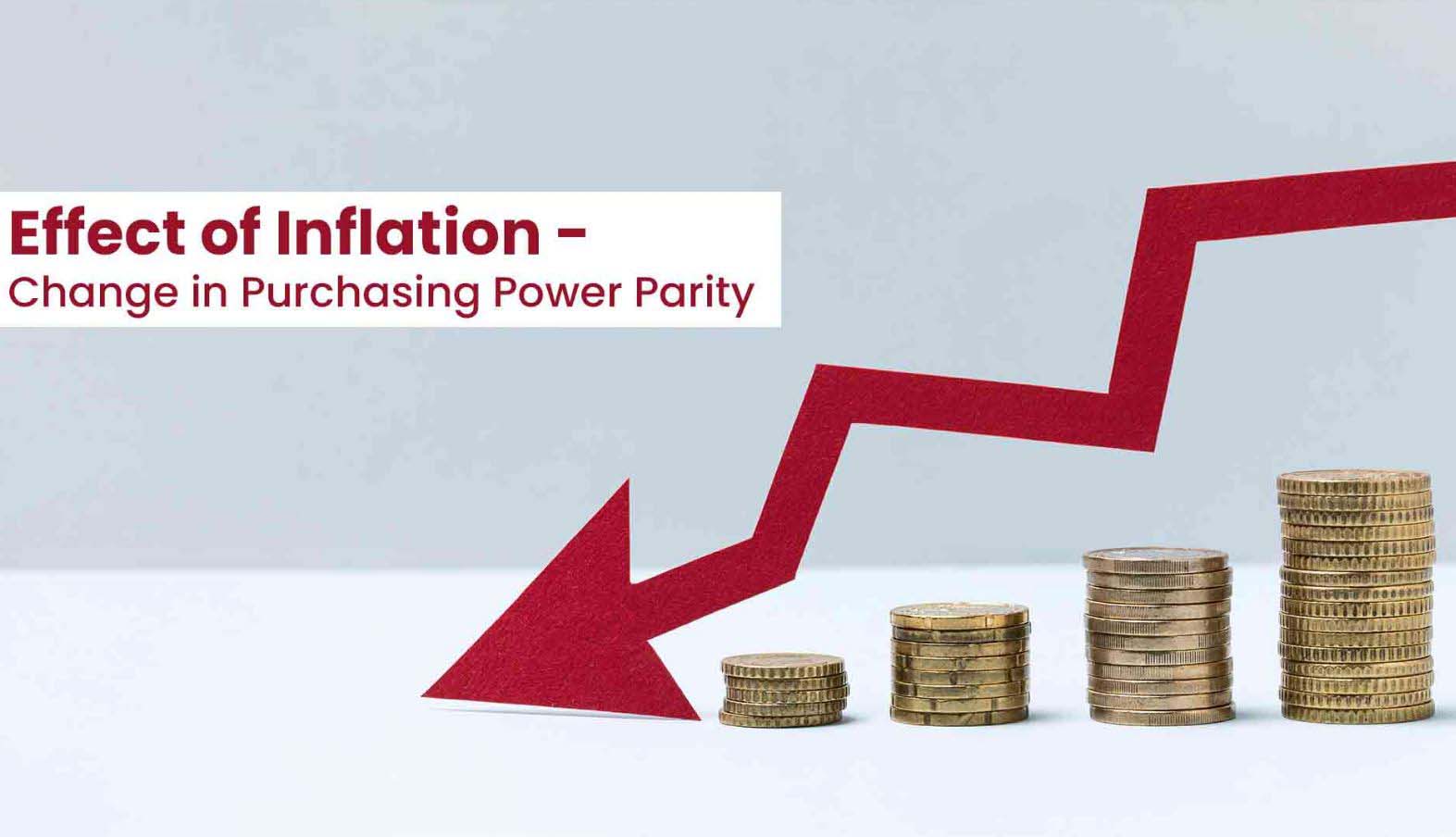
Nominal income means little without context. A higher paycheck or investment return can appear impressive until measured against what it can buy. This comparison defines purchasing power, the true yardstick of prosperity. When wages rise slower than costs, living standards decline even amid economic expansion. The illusion of more becomes the experience of less. Tracking personal purchasing power offers clearer insight than celebrating income alone. It encourages individuals to consider not just growth but growth adjusted for reality. For example, a five percent salary increase in a year with seven percent inflation is effectively a loss. The same logic applies to savings accounts and investments whose returns fail to outpace the inflation rate. Maintaining purchasing power is therefore the central challenge of wealth management. It demands continuous awareness and adaptation. Those who measure success through real value instead of nominal numbers develop strategies grounded in resilience rather than vanity. True progress shows itself when stability remains even as prices shift, proving that financial control has moved from illusion to authenticity.
How Inflation Quietly Reshapes Everyday Choices
Inflation does not announce itself with banners; it sneaks into routine decisions. It influences how people shop, save, and invest, often without conscious recognition. As costs climb, discretionary spending shrinks, altering both personal habits and corporate strategies. Families substitute brand names for generics, delay vacations, or increase side income to maintain comfort. Businesses streamline operations, renegotiate contracts, and adjust wages to preserve margins. Over time, inflation changes cultural rhythms. Luxuries become rarer, priorities tighten, and innovation accelerates as people search for efficiency. Recognizing these behavioral shifts offers an advantage. The wise observer adapts early, redirecting resources toward efficiency and durability. Inflation teaches subtle lessons in flexibility. It reminds consumers to distinguish need from want, investors to favor assets that appreciate with prices, and workers to cultivate skills that remain valuable under pressure. Every small adjustment creates protection against erosion. When approached with awareness rather than panic, inflation becomes a teacher in resourcefulness and foresight.
Strategies That Preserve Value in a Shifting Economy
Fighting inflation begins not with reaction but with design. Diversification remains the first line of defense, distributing risk across multiple assets that behave differently under pressure. Tangible holdings such as real estate or commodities often retain intrinsic value as currency weakens, while equities in essential industries can outpace inflation through pricing power. Investing in companies that produce necessities rather than luxuries shields portfolios from volatility. Fixed income instruments, though safer, lose appeal during inflationary spikes unless paired with inflation-indexed securities that adjust returns with the price level. Beyond investments, disciplined spending and debt management matter equally. High-interest loans magnify pain when money loses value, while low-interest fixed-rate debt can become cheaper to repay in real terms. Regular reviews of financial plans ensure adaptability as conditions evolve. No single asset protects perfectly, but balance across time horizons does. The objective is not to eliminate inflation’s influence but to reduce its reach. Consistent monitoring of both markets and personal habits builds a framework of resilience that keeps wealth functional even when purchasing power strains under pressure.
The Global Web of Inflation and Interconnected Economies
Inflation today rarely remains local. Globalization ties every market to shared supply chains, energy costs, and monetary flows. When one region experiences disruption, ripple effects travel through trade and investment channels to others. A drought in one agricultural zone can raise food costs worldwide, and changes in a major nation’s currency can shift commodity prices everywhere. Understanding this networked environment allows individuals to interpret headlines as signals rather than shocks. Exchange rates, central bank policies, and geopolitical tensions each contribute to inflation’s rhythm. A balanced investor considers global dynamics as part of personal planning, because foreign inflation can affect domestic value through imports, travel costs, and investment exposure. The modern economy rewards those who watch patterns beyond borders. Inflation, when viewed globally, becomes a mirror of collective behavior rather than isolated mismanagement. Recognizing these connections transforms fear into context, equipping individuals to navigate complexity without paralysis. Every economy influences and is influenced, forming a delicate balance of confidence, supply, and adaptation.
Generational Lessons in Value and Adaptation
Each generation faces inflation differently depending on history and habit. Those who lived through scarcity tend to value savings and frugality, while younger consumers raised during low inflation often prioritize growth and experience. When inflation rises after years of calm, this generational contrast creates friction in financial attitudes. Parents urge restraint, while younger adults seek creative income solutions instead. Both approaches carry wisdom. Elders remind society that prudence protects longevity, while youth prove that innovation generates opportunity. Combining both perspectives builds strength. Understanding how different age groups respond to inflation also reveals emotional patterns that shape markets. Retirees adjust portfolios toward safety, while younger investors embrace volatility. These shifts create cycles of demand and liquidity that policymakers monitor closely. Awareness of generational psychology helps individuals anticipate trends in housing, spending, and employment. Inflation becomes not only an economic condition but a cultural phenomenon, teaching families and societies to evolve together. Through shared understanding, wealth preservation becomes a collective rather than solitary effort, reinforcing continuity across time.
Transforming Awareness Into Enduring Stability
Inflation will never disappear, because economies breathe through expansion and contraction. The goal is not to escape it but to evolve alongside it. Awareness converts reaction into readiness. By measuring real value instead of surface numbers, by balancing ambition with caution, and by learning from history without fear, individuals build resilience that lasts beyond cycles. Every financial plan should include flexibility, education, and humility, because these qualities anchor wealth more firmly than any single investment. Purchasing power may ebb and flow, but its preservation depends on constant attention to proportion. Inflation teaches respect for time, for patience, and for adaptability. Those who internalize its lessons learn to see through illusion and act with grounded intelligence. Money may lose memory when value erodes, but people who remain awake to change write new memory through mindful action. In that awareness lies true protection, where stability is not the absence of change but mastery of it. Lasting wealth belongs to those who turn knowledge into habit and observation into peace.